The House on Thursday passed Midnight Rule Relief Act of 2016legislation that would
allow Congress to overturn in a single vote any regulations finalized in
the last days of the Obama administration.

Midnight Rule Relief Act of 2016
This bill prohibits a federal agency (excluding the Federal Election
Commission, the Board of Governors of the Federal Reserve System, the
Federal Deposit Insurance Corporation, or the U.S. Postal Service) from
proposing or finalizing any midnight rule unless the Office of
Information and Regulatory Affairs (OIRA) of the Office of Management
and Budget finds that it will not result in:
(1) an annual effect on the
economy of $100 million or more;
(2) a major increase in costs or
prices;
(3) significant adverse effects on competition, employment,
investment, productivity, innovation, or the ability of U.S.-based
enterprises to compete internationally; or
(4) a significant economic
impact on a substantial number of small businesses.
The bill
defines "midnight rule" as an agency statement of general applicability
and future effect that is issued during the moratorium period, that is
intended to have the force and effect of law, and that is designed to:
(1) implement, interpret, or prescribe law or policy;
(2) describe
the procedure or practice requirements of an agency. The "moratorium
period" begins on the day after the Tuesday next after the first Monday
in November in every fourth year succeeding a presidential election and
extends through January 20 of the following year in which a President is
not serving a consecutive term.
(Sec. 3) Such prohibition shall
not apply to any deadline for, relating to, or involving any midnight
rule that:
(1) was established before the beginning of the moratorium
period, and
(2) is required to occur during the moratorium period.
(Sec.
4) The bill exempts any midnight rule that the President determines is
necessary:
(1) because of an imminent threat to health or safety or
other emergency,
(2) to enforce criminal laws,
(3) to protect U.S.
national security, or
(4) to implement an international trade agreement.
The moratorium does not apply to a midnight rule if the OIRA finds that
such rule is limited to repealing an existing rule and certifies such
finding in writing.
Despite
Democratic opposition, the Midnight Rule Relief Act passed largely
along party lines, by a 240-179 vote. The bill would amend the
Congressional Review Act to allow Congress to overturn many rules all at
once by way of a resolution.
The American people have said no to the continuance of the obama administration’s harmful divisive policies.
This
bill guarantees that Congress can prevent any and all last-minute
defiance of the people’s will by midnight regulations done in the dark of night with NO Congressional over site.
House Republicans are doing everything in their power to keep the
Obama administration from enacting any new rules in its final days. Rules which would further cripple and already suffering nation and stagnate economy.
Earlier
in the week, House Majority Leader Kevin McCarthy (R-Calif.) warned the
federal agencies in a letter not to finalize any pending rules or
regulations from now to the inauguration. Those that are, he assured,
will be scrutinized and in appropriate circumstance overturned.
While the bill targets rules finalized in the lame-duck period between Election Day and President-elect Donald Trump’s Jan. 20 inauguration, Rep. Hank Johnson (D-Ga.) argues its reach is much further. Despite the bill’s colorful title, he said the legislation allows Congress to overturn rules finalized as far back as May.
Johnson
cited pro-regulatory groups like Public Citizen in disputing Republican
claims that midnight regulations are rushed through at the end of an
administration in haste and mostly for the payback to large financial donors. Such as Mark Rich's midnight pardon on Bill Clinton's last day in office. A move seen the world over as quid-pro-quo for the Rich's large financial donations to Bill Clinton's Presidential library.
Quoting a recent report, he said rules
finalized in the last three months of an administration take 3.6 years
on average to complete. Basically, causing serious damage to President Trumps 4 years in office.
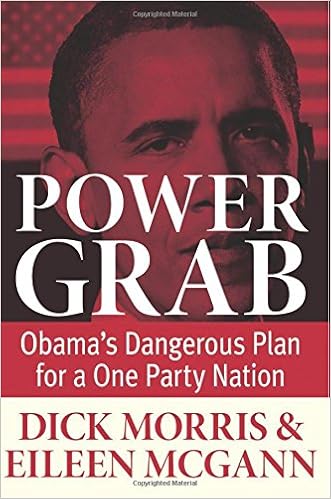
This law is a push back against the Executive offices recent power grab which began with obama personally re-writing portions of obamacare from the oval office. Powers which are inherently the domain of Congress as put forth in the United States Constitution.
Such as in May 2016 a federal judge dealt President obama and his health care law a major
blow Thursday, ruling in favor of House Republicans who said the
administration broke the law and trod on Congress’ fundamental powers by
paying obamacare insurers without permission from Capitol Hill.
An appeal is certain, but should U.S. District Court
Judge Rosemary Collyer’s ruling be upheld, it could spark the economic
“death spiral” Republicans have predicted and Democrats feared would
doom the 2010 Affordable Care Act.
But the ruling has implications
far beyond obamacare, signaling that federal courts may begin to play a
more active role in... reeling in executive powers that many legal experts
say have grown far beyond what the country’s founders intended."
Legislation and regulation belongs in the purview of Congress. This bill simply reasserts the authority that’s constitutionally and inherently belongs to the House and Senate.
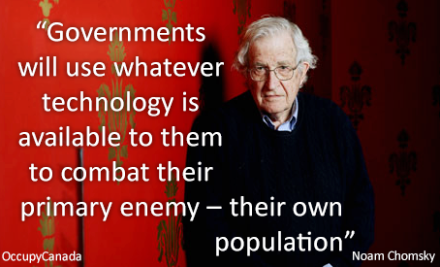
Above Quote is Something to think About...
Some info from:http/www.thehill.com